
As we age, it is normal for the joints and discs in our body to experience wear and tear. When this happens in the neck, it is referred to as Cervical Spondylosis, or arthritis of the neck. It is a very common condition, especially in people over the age of 50.
What Causes It? Over time, the discs in your cervical spine (neck) dry out and shrink. This reduces the cushioning between your vertebrae. To compensate for this instability, the body may grow bone spurs. These changes can narrow the space available for the spinal cord and nerves.
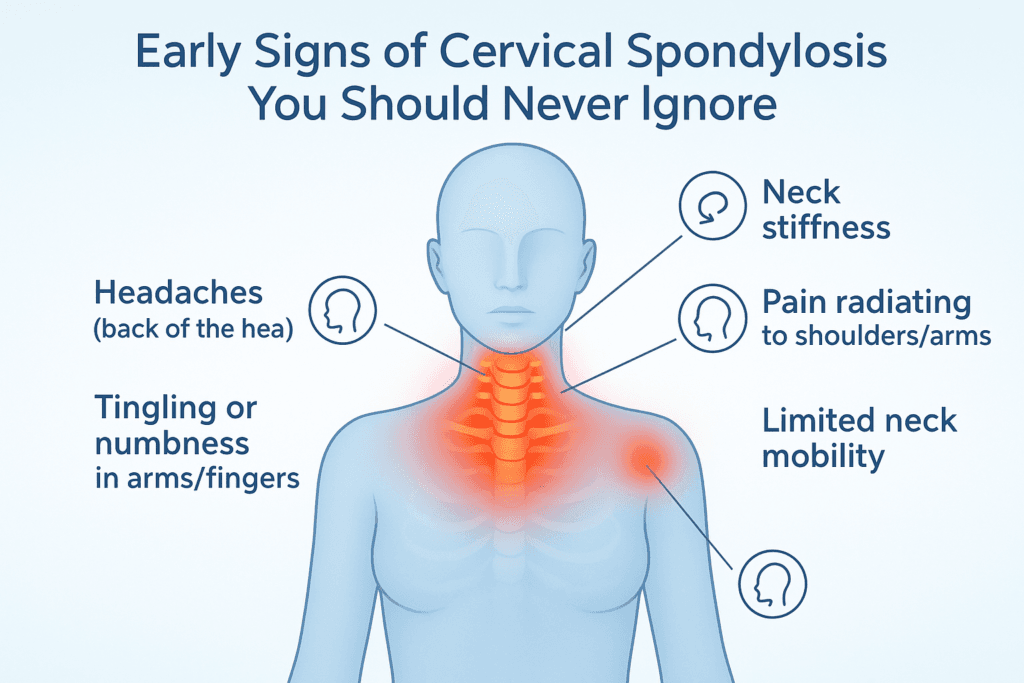
Common Symptoms Many people with cervical spondylosis have no symptoms at all. When symptoms do occur, they typically include:
- Stiffness and pain in the neck, which may worsen with certain activities.
- Headaches that originate at the base of the skull.
- A grinding or popping sound when turning the neck.
- If a nerve is pinched, you may feel pain, tingling, or numbness radiating down your arm and into your fingers.
Management Strategies For the vast majority of patients, cervical spondylosis can be managed effectively without surgery.
- Physical Therapy: Strengthening the neck and upper back muscles provides better support for the cervical spine.
- Medications: Nonsteroidal anti-inflammatory drugs (NSAIDs) can reduce pain and swelling during flare-ups.
- Ergonomics: Adjusting your sleeping pillows and computer setup to keep your neck in a neutral position is crucial.
If you experience severe radiating arm pain, numbness, or difficulty with your balance or walking, it is important to see a spine specialist promptly.
