
If you find yourself needing to sit down after walking just a short distance, or if you naturally lean over the shopping cart at the grocery store to relieve pain in your legs, you might be suffering from Lumbar Spinal Stenosis.
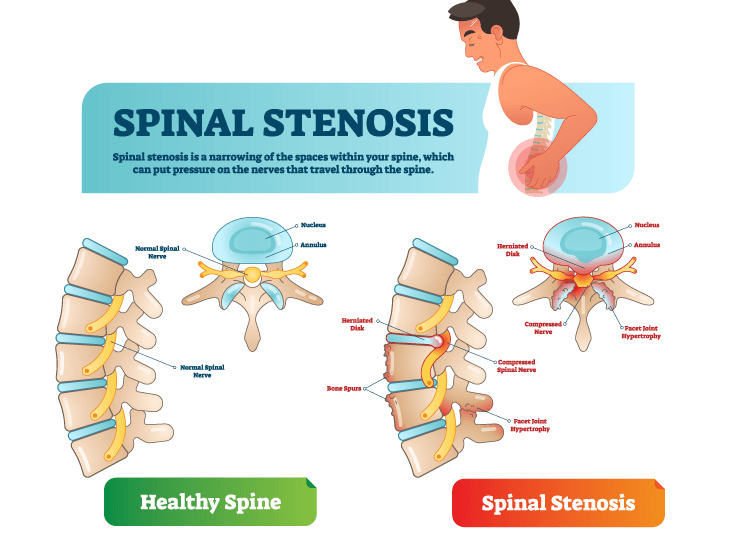
What is Spinal Stenosis? “Stenosis” simply means narrowing. In the lower back (lumbar spine), spinal stenosis occurs when the space inside the spinal canal narrows, putting pressure on the spinal cord and the nerves that travel down to your legs. This is most commonly caused by age-related osteoarthritis, which leads to thickened ligaments and bone spurs.
The Classic Symptom: Neurogenic Claudication The hallmark symptom of lumbar stenosis is a cramping, heavy, or aching feeling in the buttocks, thighs, and calves that happens when you walk or stand for a period of time.
Why does leaning forward help? When you stand up straight or walk, the spinal canal naturally narrows a bit, pinching the nerves. When you sit down or lean forward (like over a shopping cart), the canal opens up slightly, taking the pressure off the nerves and relieving the pain.
Treatment Options Stenosis does not always require surgery. Non-surgical options include physical therapy to strengthen the back and abdominal muscles, and epidural steroid injections to reduce nerve inflammation.
If the pain severely limits your ability to walk and enjoy life, a surgical procedure called a “Laminectomy” (or decompression) may be recommended. This involves removing the bone spurs and thickened ligaments to create more room for the nerves, often providing excellent relief for leg pain.
